

As increasing amount of yacht owners want more out of their vessel than just a simple cruise along the Mediterranean coastline, and the past couple of years have seen an increased interest in expedition yachts.
People crave unique experiences in more extreme destinations: visiting remote islands in Galapagos, heli-skiing on untouched slopes, and visiting shipwrecks in the yacht’s submarine. All of these activities require more specialized facilities than a simple pleasure yacht can offer, thus the need for yachts that can handle such exploration has risen significantly.
What Is an Expedition Yacht?
There is no specific technical definition for an expedition yacht, but in broad terms they can be defined as any vessel built or modified for long distance cruising in remote and extreme locations.
While the exterior of these vessels is often more rugged and practical by design than that of traditional superyachts, expedition yachts still offer all the same luxuries on board. Passengers get to enjoy luxurious cabins and relaxation areas, an onboard spa and gym, and pretty much any other luxury that is usually associated with superyachts.
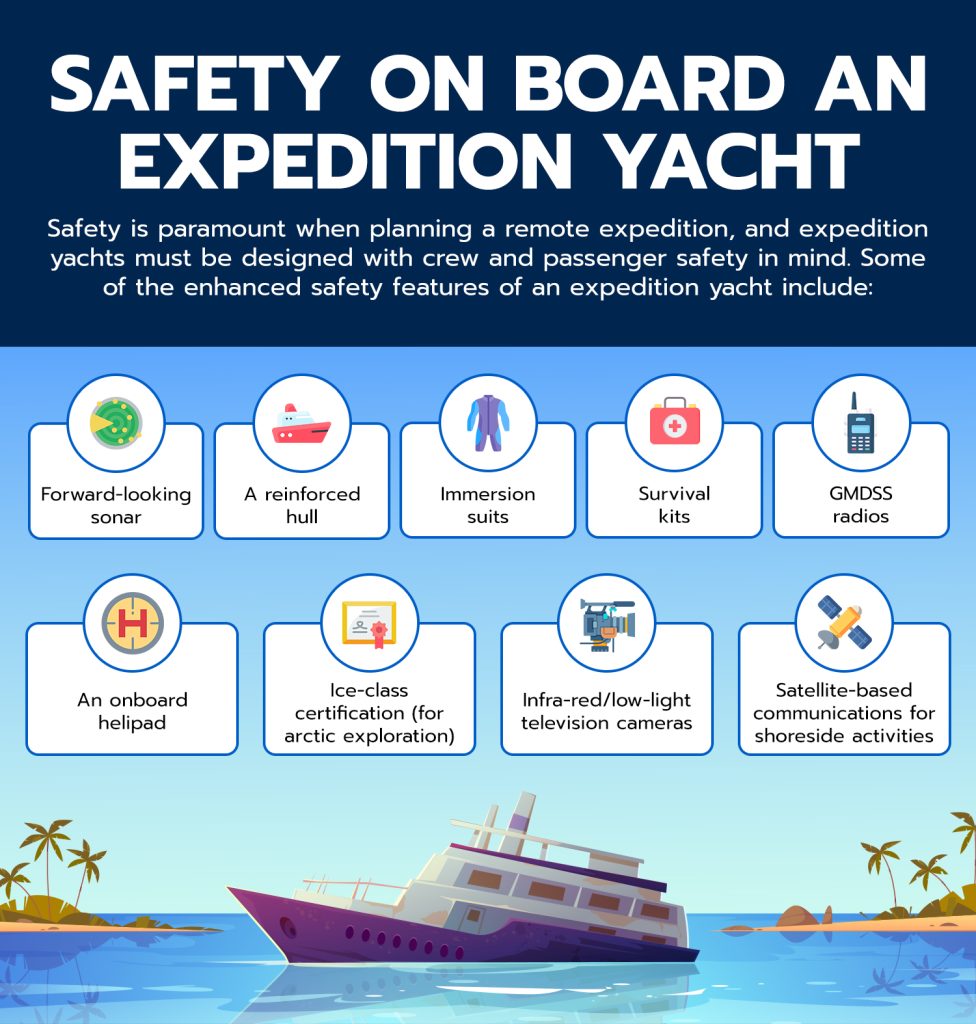
The main difference between the two is the expedition yacht’s autonomy. By its very nature, an expedition yacht needs to be able to spend long periods in rugged and remote locations without the ability to refuel, discharge waste, or resupply food and stores, and they are therefore built with these capabilities in mind. This may include strengthening of the vessel to operate in Polar conditions, more sophisticated navigational systems, strengthened and or specialized tenders, improved garbage management systems, specialized equipment and additional crew training.
Expedition Yacht Design
One of the most important parts of an expedition yacht is its seaworthiness. The vessel needs to be built to withstand rough seas and extreme weather conditions, while still offering a touch of luxury for both passengers and crew. Jako Hall, who has 11 years of superyacht captain experience and experience of navigating in remote areas, approaches challenging conditions at sea by building strong and dynamic teams where everyone has a sense of purpose and feels like they belong.
As expedition yachts are meant for long-distance travel, they need to be able to hold enough fuel for lengthy and remote journeys. The hull should be designed with efficiency and strength in mind.
Should the poles be considered for destinations, then the vessel must be built or modified in accordance with the Polar Code.
Where Can an Expedition Yacht Travel?
While expedition yachts can cover all of the same holiday hotspots as normal superyachts, their unique design means they can also travel to much more extreme and exotic locations. Expedition yachts have been known to take passengers to remote corners of Antarctica and the icy waters of Greenland and Alaska, as well as the tropical paradise of the South Pacific islands.