

Building a high-performing team is essential for achieving organizational success and fostering innovation – something that fleet captain and experienced team leader Jako Hall is passionate about. This article will outline key strategies and actionable insights to cultivate a cohesive, results-driven team environment.
What Is a High-Performing Team?
A high-performing team is a group of skilled individuals with complimentary talents and assets. Team members each have their own specific roles and are carefully selected to fit in and support each other. They are not afraid of challenges or conflict and strive to innovate and explore new ideas.
High-performing teams thrive on effective collaboration and supportive teamwork. They are highly focused on achieving exceptional results, while tempering more extreme opinions that could be detrimental to the team.
High-performing teams also cultivate a positive working environment and deliver robust results. This dynamic not only drives organizational success but also fosters long-term growth and innovation.
Building a high-performing team takes planning and leadership, as well as continuous learning and team building. This means putting in place strategies that support and sustain the team’s performance and addressing any issues or conflicts that may crop up.
Clear Structure and Objectives
For a team to work effectively, its members need clearly defined roles and goals. Everyone in the team should understand the objectives of their specific role and how it fits in with the rest of the team and the overall objective.
Support and Encouragement
Providing a supportive and encouraging work environment is very important for good teamwork. It is helpful to focus on each team member’s personal achievements to make sure they know that their input is valued. Equally, it is imperative to encourage the whole team and offer them support collectively.
Clear Communication
Clear communication is key for effective teamwork, and this applies to both team members and management. Encouraging open and honest communication – and making sure that team members feel like they can express their ideas and concerns – will foster a positive working environment.
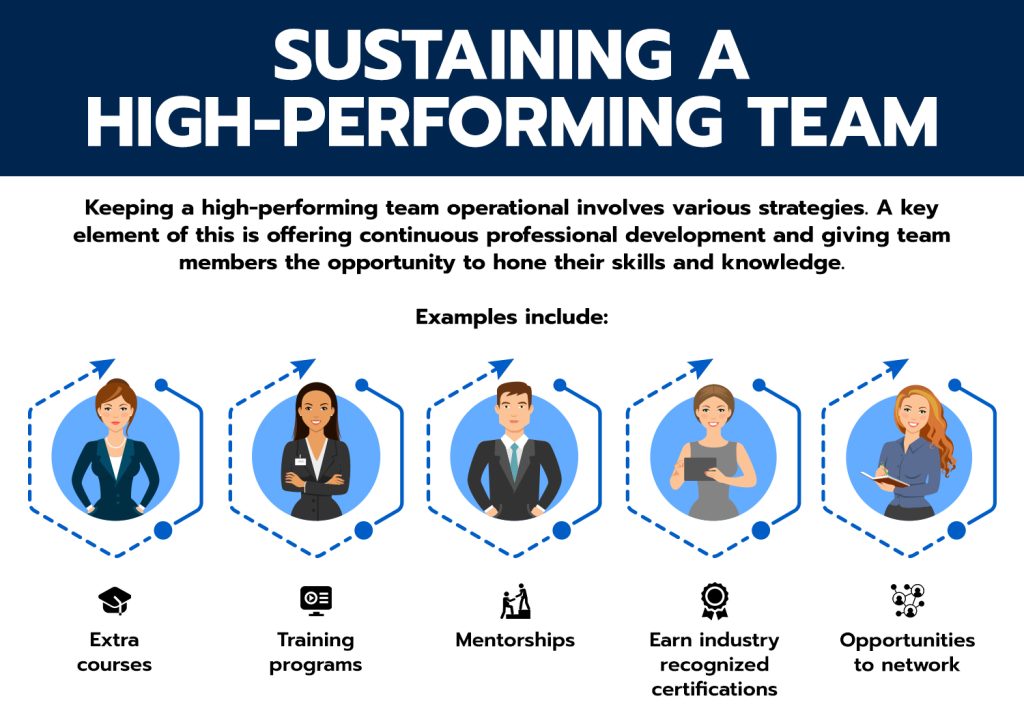
Continuous Learning
Offering continuous opportunities for skill development and professional growth can help to keep a team motivated. Engaging in continuous learning will boost morale and decrease the chances of team members becoming complacent or bored.